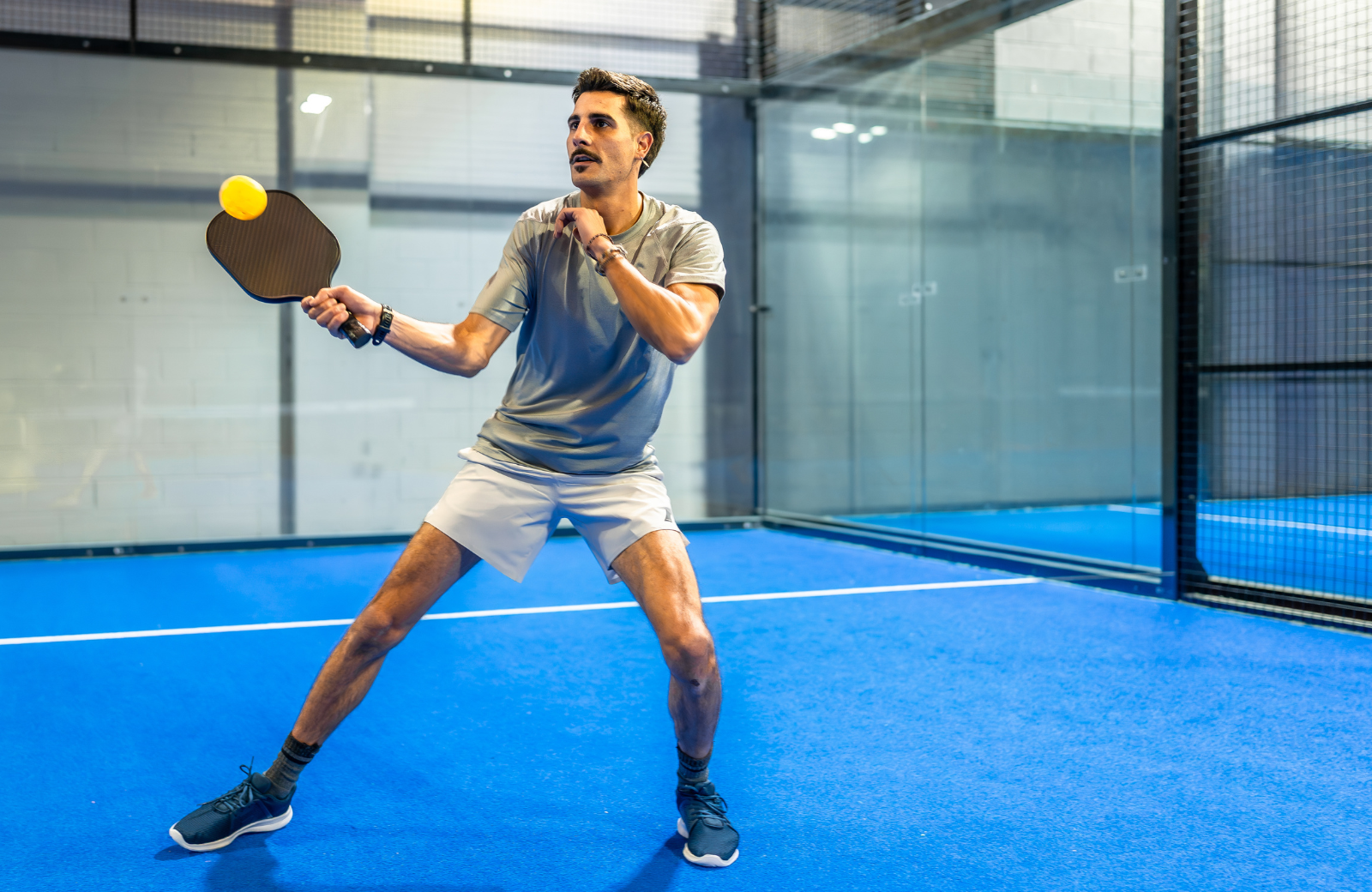
Most pickleball injuries fall into three buckets: falls that cause fractures and wrist injuries, sudden strains and sprains from lunging or backpedaling, and slow building overuse problems in the shoulder, elbow, knee, and Achilles. Falls cause the serious ones, and overuse causes the ones that quietly end your season.
The good news is that almost all of them respond to strength, footwork, and a smarter warm up. You do not have to play less to stay healthy, and you do not have to play through pain either.
Do This Today
- Warm up for 8 minutes before your first serve, not after your first game.
- Practice a controlled shuffle back instead of running backward for lobs.
- Add two strength sessions a week focused on hips, calves, and shoulders.
- Replace court shoes when the tread wears smooth, since slips cause the worst injuries.
- Get pain checked if it lasts more than two weeks or changes how you move.
What Are the Most Common Pickleball Injuries?
The most common pickleball injuries are sprains and strains, fractures from falls, and tendon irritation in the shoulder, elbow, and Achilles. The mix shifts with age, and the mechanism matters more than the sport itself.
Falls, Fractures, and Wrist Injuries
Falls cause the injuries that put people in the hospital. Backpedaling for an overhead is the classic setup, because your weight travels behind your feet and you land on an outstretched hand or hip.
Wrist fractures dominate this group, followed by hip and shoulder injuries. A single fall can cost you months, which is why footwork deserves more attention than paddle upgrades.
Sprains and Strains
Sudden direction changes strain the calf, hamstring, groin, and ankle. Pickleball asks for short explosive steps in a small space, and that is exactly the pattern muscles tear under.
- Calf strains from pushing off hard toward the kitchen line.
- Ankle sprains from stepping on a ball or planting on the sideline.
- Hamstring and groin strains during a wide reach or a quick split step.
- Low back strain from repeated bending for dinks and low volleys.
Overuse Injuries That Build Slowly
Overuse problems arrive without a moment you can point to. You play four days a week, something starts to nag, and three months later it dictates your schedule.
- Lateral elbow pain, often called tennis elbow, from repeated paddle impact.
- Rotator cuff irritation from serves and overheads.
- Achilles tendinopathy from constant push off in a low stance.
- Knee pain from long stretches spent in a half squat at the net.
Talk With Our Team Before Small Pain Grows
If something has bothered you for more than two weeks, call us at 858-324-5537. You can also speak with our team and get a straight answer about whether it needs treatment or just a change in how you play.
Why Are Pickleball Injuries Rising So Fast?
Pickleball injuries are rising because participation exploded and the average player is older than in most court sports. More players, more hours, and more time on a hard surface adds up quickly.
What the Emergency Department Data Shows
A study published in Arthroscopy, Sports Medicine, and Rehabilitation tracked national emergency department visits and found that pickleball injuries rose 91 percent between 2020 and 2022, climbing from roughly 8,894 to 16,997 per year. Hospital admissions linked to those injuries rose 257 percent over the same period.
The same analysis found that 73 percent of injuries happened to players between 60 and 79 years old. Fractures made up 29 percent of cases and strains and sprains made up 21 percent.
Why Age Changes the Risk Picture
Older players are not fragile, and they do face a different mix of risks. Bone density, balance, and reaction time all shift with age, which turns a stumble into a fracture instead of a stumble.
A national review of ten years of emergency department records for players aged 60 and older, published in Injury Epidemiology, found that slips, trips, falls, and dives accounted for 63.3 percent of pickleball injuries in that group. Strains and sprains were the leading diagnosis at 33.2 percent, followed by fractures at 28.1 percent.
That single finding should reshape how you train. If two thirds of serious injuries start with losing your footing, balance and footwork are your best protection.
Which Body Parts Get Hurt Most in Pickleball?
Lower body injuries dominate the sudden category, and upper body injuries dominate the overuse category. Use this grid to match what you feel with what usually causes it.
| Area | Typical Injury | What It Feels Like | Typical Recovery |
|---|---|---|---|
| Wrist and forearm | Fracture or sprain from a fall | Immediate pain, swelling, weak grip | 6 to 12 weeks |
| Shoulder | Rotator cuff irritation | Ache with overheads and sleeping on that side | 6 to 12 weeks |
| Elbow | Lateral elbow tendinopathy | Sharp pain on the outside with gripping | 8 to 16 weeks |
| Low back | Muscle strain or joint irritation | Stiffness after play, pain bending for dinks | 2 to 6 weeks |
| Knee | Patellar or meniscus irritation | Ache with squatting, stairs, and quick pivots | 4 to 10 weeks |
| Calf and Achilles | Strain or tendinopathy | Sudden pop, or morning stiffness in the heel cord | 3 to 12 weeks |
| Ankle | Lateral sprain | Rolling in, swelling on the outside | 2 to 8 weeks |
How Do You Prevent Pickleball Injuries?
Prevention comes down to four things: a real warm up, lower body strength, better footwork, and shoes that grip. None of them take much time, and together they change your risk profile completely.
Warm Up Like You Mean It
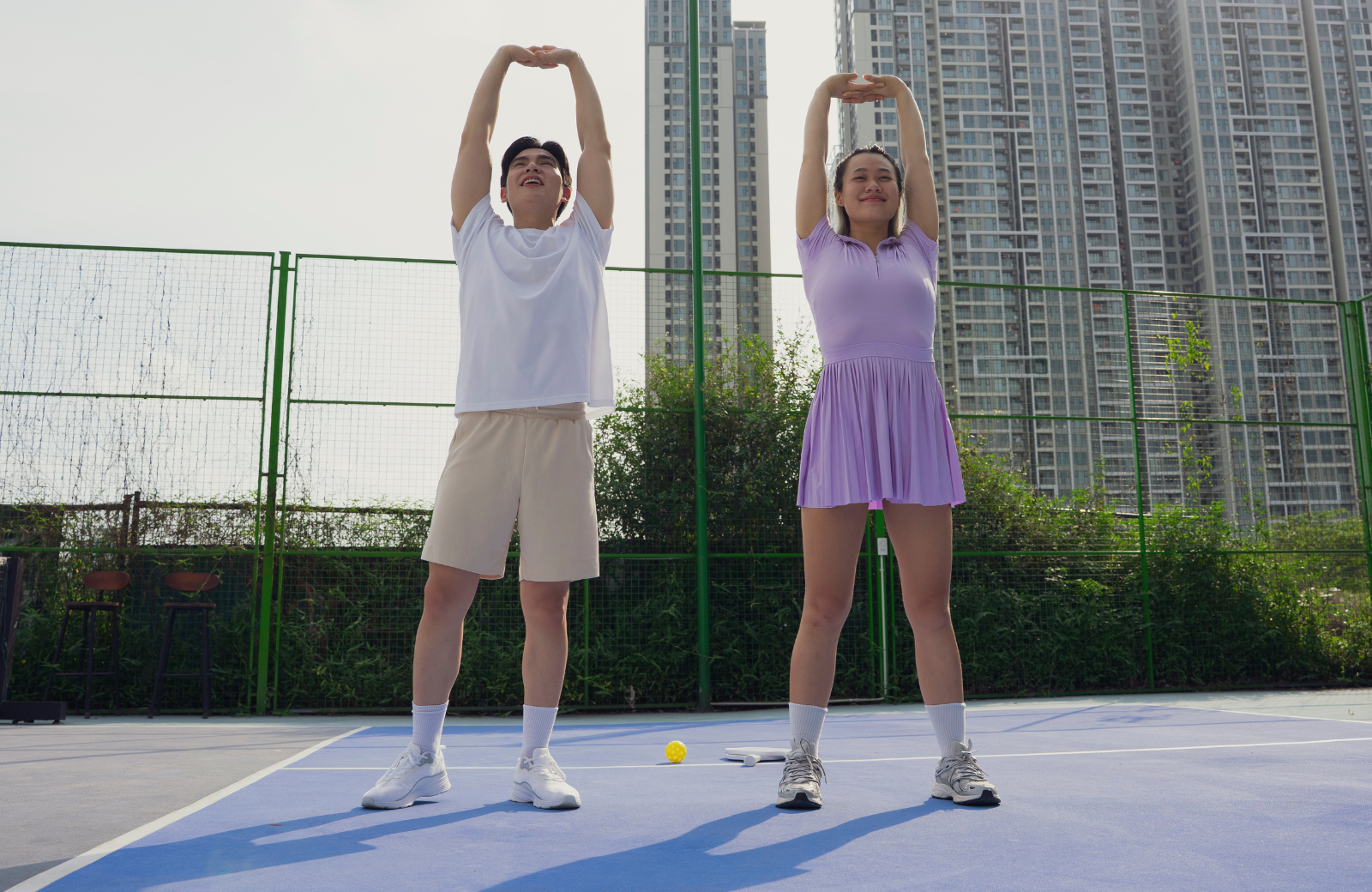
Eight minutes before play beats an hour of treatment later. Your goal is to raise your heart rate, move your joints, and prime the muscles you are about to load.
- Two minutes of easy walking or marching around the court.
- Leg swings forward and sideways, 10 each direction.
- Ten slow bodyweight squats and 10 calf raises.
- Arm circles and light shadow swings, 20 of each.
- Four short side shuffles and two easy split steps.
Strength That Actually Protects You
Two short sessions a week build the tissue that absorbs court forces. Focus on the areas that fail, not on general fitness.
- Calf raises, single leg when possible, 3 sets of 15.
- Step ups or split squats for hip and knee control, 3 sets of 10 each side.
- Hip abduction work with a band, 3 sets of 15.
- Rows and external rotation for the shoulder, 3 sets of 12.
- Grip and forearm work to protect the elbow, 3 sets of 20 seconds.
Balance Work Is Not Optional
Since most serious pickleball injuries start with losing your footing, balance training pays for itself. Two or three minutes a day is enough to make a measurable difference in how you recover from a stumble.
- Stand on one foot for 30 seconds, then try it with your eyes closed.
- Practice a slow heel to toe walk down a hallway, 20 steps each way.
- Add a single leg reach toward the floor, 8 reps on each side.
- Finish with 10 controlled side steps in a half squat position.
Build these into your warm up so they actually happen. Balance fades quietly with age, and it returns quickly once you train it.
Footwork and Court Habits
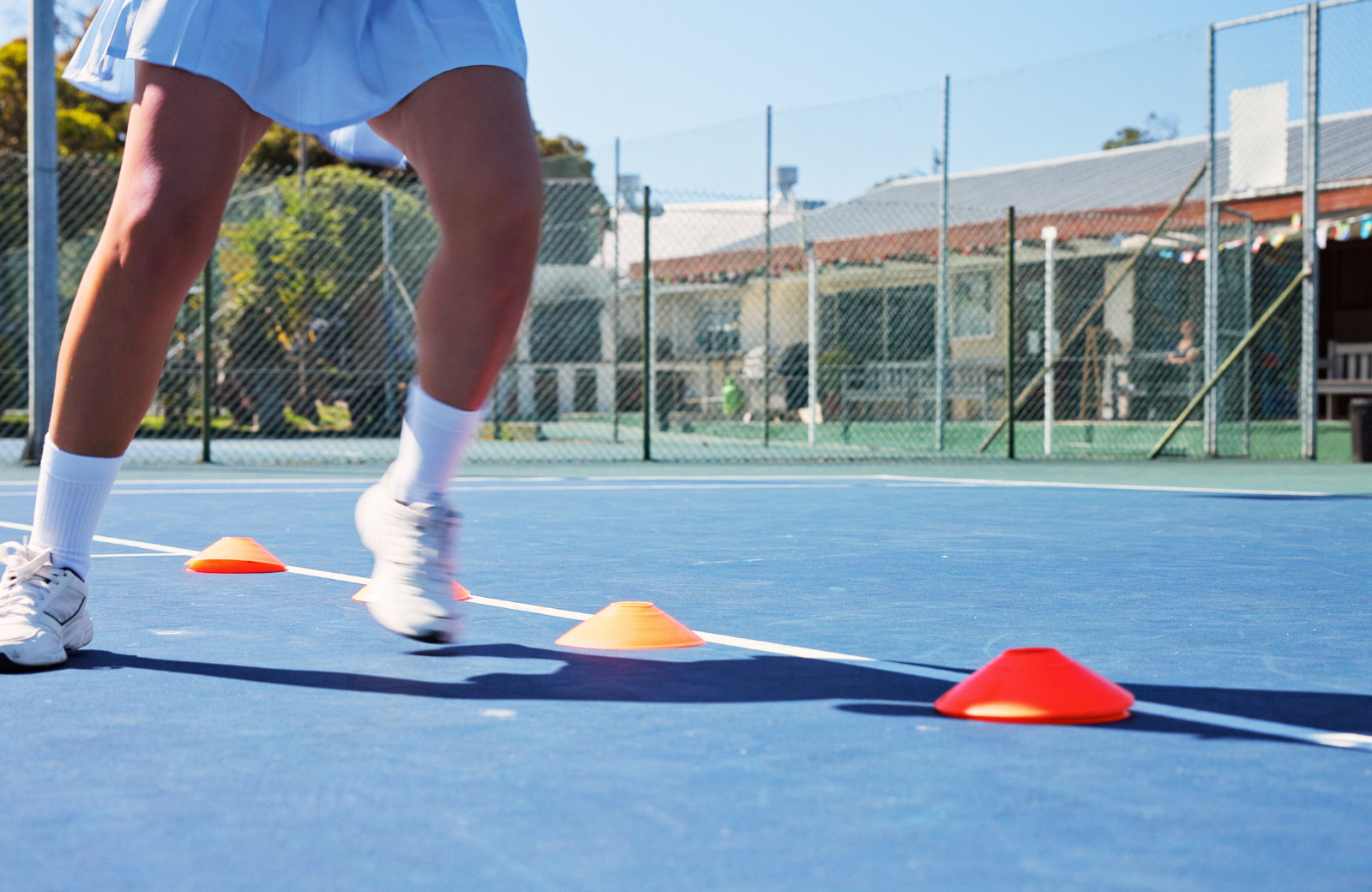
Never run backward for a lob. Turn your hips, shuffle or crossover step, and let the ball go if you cannot get behind it safely.
Call the ball early in doubles so you are not reaching across a partner at the last second. Most collisions and awkward twists come from a split second of hesitation.
Gear That Matters
Court shoes with lateral support beat running shoes on a pickleball court. Running shoes are built to move forward, and they roll under you during side steps.
Replace them when the tread smooths out. A lighter paddle with a comfortable grip size also reduces the load your elbow absorbs on every hit.
What Should You Do When Something Hurts During a Game?
Stop playing if you felt a pop, if you cannot put full weight on the leg, or if pain changes how you move. Finishing the game is what turns a two week problem into a two month one.
The First 48 Hours
- Keep moving gently within a pain free range rather than shutting down completely.
- Use compression if swelling makes the area feel heavy.
- Elevate the limb when you are resting.
- Skip heavy stretching and deep massage on a fresh injury.
What Not to Do
Do not test the injury with a hard sprint or a full swing to see if it still hurts. That test tells you very little and often makes the tissue angrier.
Do not wait a month to see whether it fades. Early guidance shortens recovery and keeps you from building habits that create the next problem.
How Long Does It Take to Get Back on the Court?
A mild sprain or strain usually allows return to light play in two to four weeks, while a fracture or a significant tendon problem can take three months or more. Your return depends on capacity, not on the calendar.
The Milestones We Look For
- Full, pain free range of motion in the injured area.
- Strength within 90 percent of the other side.
- Comfortable hopping, shuffling, and split stepping.
- A practice session with no next day soreness.
Rushing this stage is the most common reason people get hurt twice. The second injury usually lands in the same place, and it keeps you out roughly twice as long.
Easing Back In
Start with dinking and controlled rallies before you play points. Add serves and overheads last, since those load the shoulder and back the hardest.
Give yourself two or three sessions at reduced intensity before returning to competitive play. Our Scripps Ranch sports rehab plans map this out so you know exactly what each week looks like.
When Is Pickleball Pain Worth a Professional Opinion?
Get checked if pain lasts longer than two weeks, wakes you at night, or comes with swelling and instability. Those signs suggest something structural rather than simple soreness.
Also come in after any fall where you landed on your wrist, shoulder, or hip, even if you can still move it. Small fractures hide behind decent range of motion for days.
Repeat problems deserve attention too. A third bout of elbow pain means the load and the strength are mismatched, and that gap will not close on its own.
Frequently Asked Questions
What is the most common pickleball injury?
Strains and sprains are the most common overall, with ankle sprains, calf strains, and low back strains leading the list. Fractures are less frequent but far more serious, and they usually follow a fall. Among older players, falls account for the majority of injuries that reach an emergency department.
Is pickleball harder on your body than tennis?
Pickleball involves less running and shorter swings than tennis, so the total load is lower. The court is small, though, which means more quick stops, starts, and reaches in a tight space. National injury data shows senior pickleball injuries reaching similar numbers to senior tennis injuries as participation has grown.
How do I stop rolling my ankle on the court?
Wear court shoes with lateral support and replace them once the tread wears down. Build ankle and calf strength with single leg calf raises and balance work on one foot. Watch for stray balls and keep your steps shorter near the sidelines.
Can I play pickleball with a knee replacement?
Many people return to pickleball after a knee replacement once their surgeon clears them and their strength returns. Doubles play, good court shoes, and solid quad and hip strength make it much more comfortable. Talk with your surgeon and build a strength base before you step back on the court.
Why does my elbow hurt after pickleball?
Repeated impact through the paddle irritates the tendons on the outside of the elbow, especially with a heavy paddle or a grip that is too small. Grip strength work, forearm loading, and a paddle change usually settle it. Rest alone tends to help briefly and then the pain returns when you play again.
Should I stretch before or after pickleball?
Save long static stretches for after play, and use active movement before it. Leg swings, squats, calf raises, and shadow swings prepare your body better than holding a stretch. A short dynamic warm up also improves how you move in the first game.
Keeping You on the Court, Not on the Sideline
Pickleball injuries are common, and very few of them require you to give up the sport. The players who stay healthy treat strength and footwork as part of the game.
What We Do Differently
Every session at Auto Ness Physical Therapy is a full hour, one on one with your Doctor of Physical Therapy. No techs, no aides, and no watching the clock while someone else runs your exercises.
We look at your whole body, not just the painful joint. Movement is medicine, and the right plan gets you back on the court without medication or surgery.
What Your First Visit Looks Like
Your first appointment is a 60 minute assessment with hands on treatment starting the same day. We test your balance, strength, and movement, then build a plan around the way you actually play.
You leave with exercises, a timeline, and a clear next step. Our sports rehab patients get a written progression back to full play instead of a vague instruction to rest.
Ready to Play Without Wincing?
Call us at 858-324-5537 to talk with a physical therapist about what you are feeling. Ask about a free Discovery Visit, download one of our free guides, or join a free seminar to see what your options look like.
We are right here in Scripps Ranch, helping active adults across San Diego stay in the games they love. Schedule your visit and let us build your comeback.